
Uganda Endorses Nairobi Outcome at UNESCO World Heritage Committee, Calls for Greater Protection of Africa’s Cultural Heritage
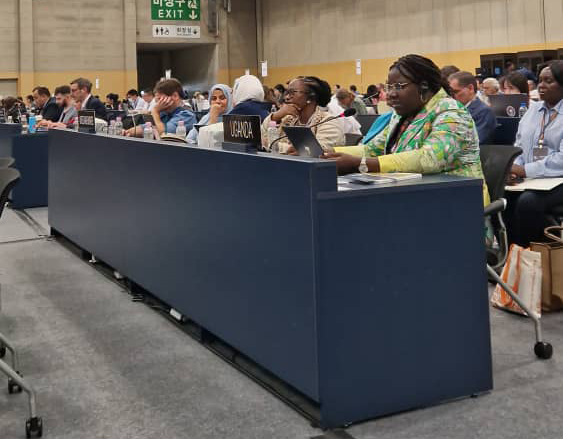
BUSAN, SOUTH KOREA – Uganda has reaffirmed its commitment to safeguarding Africa’s cultural heritage by endorsing the Nairobi Outcome Document during the 48th Session of the UNESCO World Heritage Committee, currently underway in Busan, South Korea.
Presenting Uganda’s position on 22 July 2026, the Head of Delegation, H.E. Doreen Ruth Amule, welcomed the Nairobi Outcome as a significant step towards strengthening the authenticity and integrity of cultural heritage conservation, particularly within the African context.
“The Nairobi Outcome builds on the strong foundations laid by the 1964 Venice Charter and the 1994 Nara Document on Authenticity,” Uganda noted in its statement, adding that its implementation through institutionalization and capacity building would reinforce a more inclusive and representative approach to heritage management.

The Nairobi Outcome Document emerged from international discussions aimed at rethinking how authenticity and integrity are understood and applied in heritage conservation. While the Venice Charter established guiding principles for the conservation and restoration of monuments and sites, and the Nara Document expanded the concept of authenticity by recognizing the diversity of cultures and heritage traditions worldwide, the Nairobi Outcome places greater emphasis on African perspectives, local knowledge systems, and community participation.
For many African countries, the document represents an important shift towards ensuring that heritage is not assessed solely through external standards, but also through the cultural values, traditions, and lived experiences of the communities that have safeguarded these sites for generations.
Uganda said adopting and operationalizing the Nairobi Outcome would demonstrate the World Heritage Committee’s commitment to prioritizing Africa’s heritage while promoting inclusiveness in the implementation of the UNESCO World Heritage Convention.
According to the Ugandan delegation, the framework provides practical opportunities to strengthen cooperation among State Parties, enhance technical expertise in heritage conservation, and empower local communities, especially young people, to actively participate in preserving their cultural legacy.
“The Nairobi Outcome strengthens cooperation, enhances technical capacity, and empowers our communities and youth to safeguard their own cultural legacy,” the statement read. “By supporting it, we affirm that African heritage deserves recognition not only within global systems but on African terms.”
Uganda further expressed its full support as UNESCO begins the Fourth Cycle of Periodic Reporting for World Heritage properties, describing the process as an opportunity for countries to assess the state of conservation of their heritage sites, identify emerging challenges, and improve management practices.
The delegation, however, emphasized that discussions should extend beyond conference halls and translate into practical action at heritage sites across Africa. It called for continued engagement with site managers and heritage practitioners to ensure the Nairobi Outcome is effectively implemented through training, institutional support, and collaborative learning.
The statement reflects Uganda’s growing role in advocating for stronger African representation in global heritage governance. The country is home to several internationally recognized heritage sites, including the Tombs of Buganda Kings at Kasubi, a UNESCO World Heritage Site renowned for its outstanding cultural significance, as well as the Bwindi Impenetrable National Park and the Rwenzori Mountains National Park, which are recognized for their exceptional natural heritage.
As global conversations on heritage conservation continue to evolve, Uganda maintains that sustainable protection of cultural heritage must place communities at the center of decision-making while respecting indigenous knowledge and cultural diversity.
The 48th Session of the UNESCO World Heritage Committee, taking place from 19 to 29 July 2026 at the Busan Exhibition and Convention Center, marks the first time the Republic of Korea has hosted the prestigious meeting since joining the World Heritage Convention in 1988. The session has brought together representatives from across the world to deliberate on the protection of cultural and natural heritage, review the state of conservation of World Heritage properties, and strengthen international cooperation.
By endorsing the Nairobi Outcome Document, Uganda has aligned itself with a growing movement that seeks to ensure Africa’s rich cultural heritage is protected, celebrated, and interpreted through approaches that reflect the continent’s own history, traditions, and aspirations while contributing meaningfully to the global heritage agenda. – Ends-